
I. The Rise of the Fangchengbao Brand: Young Yet Rapidly Growing
Although the brand itself is still relatively young, it is undeniable that Fangchengbao has begun to rise rapidly, leveraging BYD’s resources.
Despite currently only having four mass-produced models, sales performance has been quite strong.
Particularly the BYD Fangchengbao Bao 5, after a price adjustment, now consistently sells around 4,000 to 5,000 units monthly.
Within the hardcore off-road community, this qualifies as a highly successful “blockbuster” model.
II. New Trend in Plug-in Hybrid SUVs: Larger Batteries
However, a new trend is emerging for plug-in hybrid models: increasingly larger battery packs.
Many consumers choosing plug-in hybrids actually prefer driving in pure electric mode as much as possible, avoiding frequent refueling.
Consequently, the Fangchengbao Bao 5 recently received a minor update, introducing a version with a 210-kilometer pure electric range.
III. Battery Upgrade Delivers Enhanced Range: From 125km to 210km
The most significant change is a substantial increase in battery capacity.
The Leopard 5’s battery capacity has been upgraded from 31.8 kWh to 47.8 kWh, an increase of 16 kWh.
Consequently, the range has been extended from 125 km to 210 km.
Although the price has increased by 10,000 yuan, it remains cost-effective overall.
Especially for daily commuting and short trips, the 210 km range is more than sufficient;
occasional intercity highway driving can also save a considerable amount on fuel costs.
IV. Starting at ¥269,800, it remains competitively priced
The Tian Shen Ultra version with 210 km range currently carries a suggested retail price of ¥269,800.
While slightly pricier than the Tank 300, it remains competitively priced against the Tank 400 or Tank 500.
After all, the Leopard 5 operates in a higher segment with superior dimensions. As a midsize SUV, it boasts a 2800mm wheelbase and 1970mm width.
Its spacious five-seat layout ensures ample rear legroom, effortlessly meeting family needs.
V. Exterior retains rugged styling: Simpler, more timeless
The update focuses primarily on the battery, resulting in minimal exterior changes.
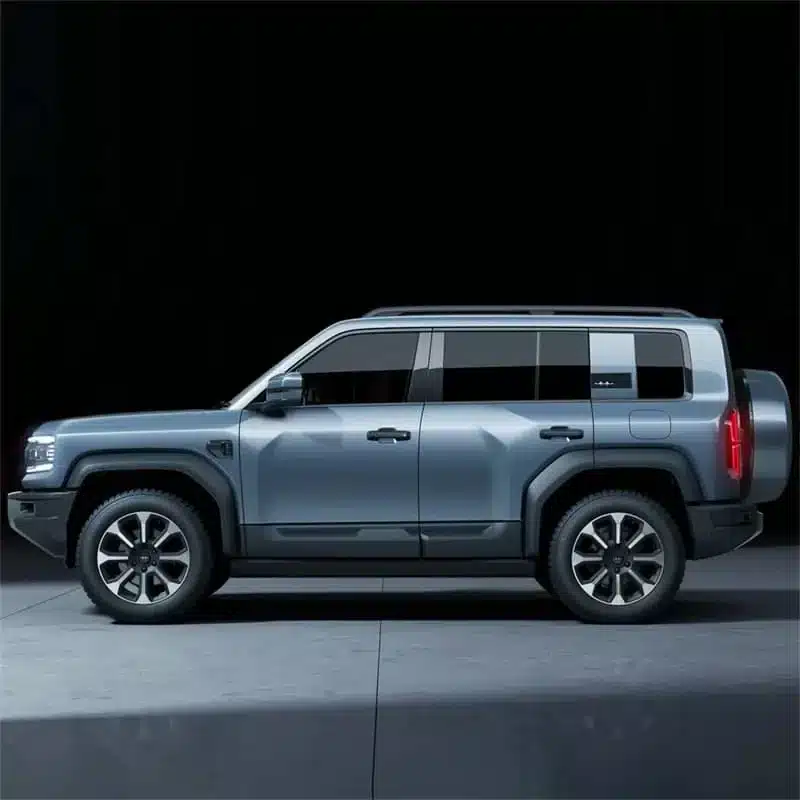
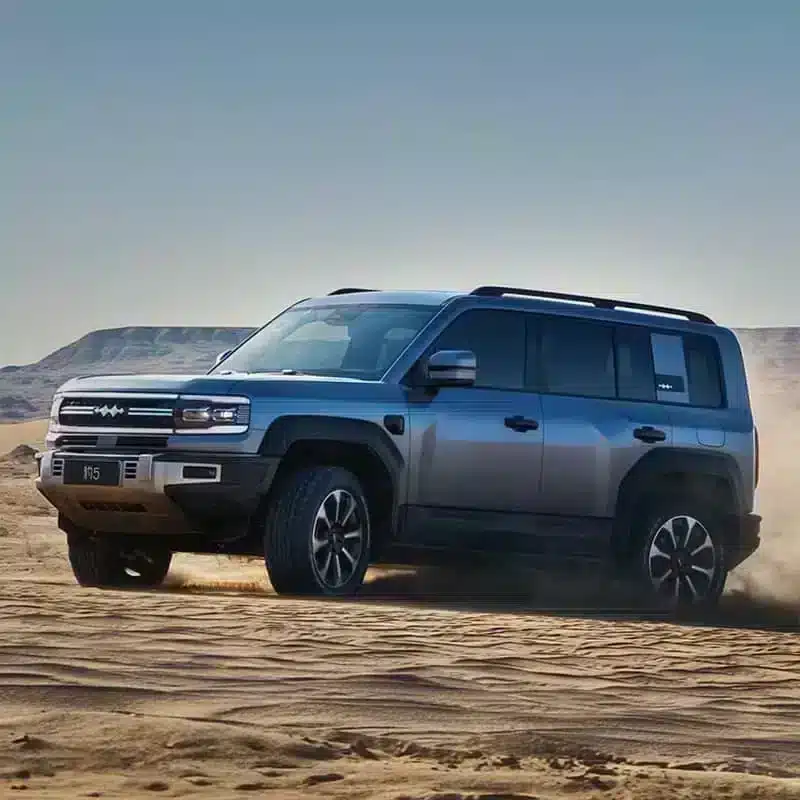
The Leopard 5 retains its boxy silhouette, appearing more streamlined than the first-generation model.
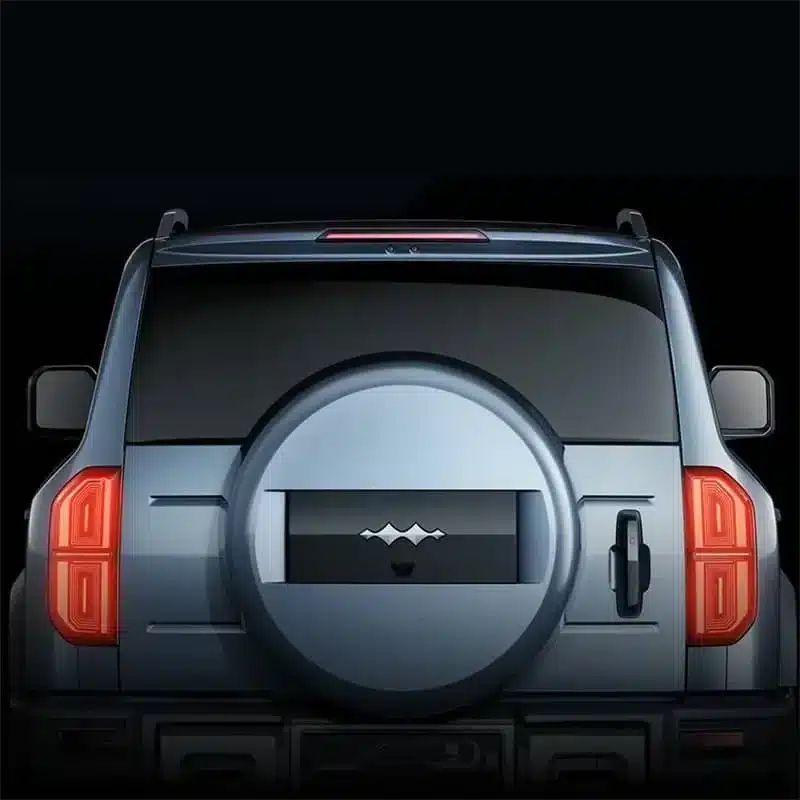
Body-colored bumpers, rugged lines, and a full-size “backpack-style” spare tire at the rear all contribute to its imposing presence.
This angular design further reinforces the brand identity of the Square Leopard series.
VI. Powerful powertrain: Entry-level model delivers 660 combined horsepower
Though the engine bay houses just a 1.5T engine producing 194 horsepower—seemingly unremarkable—
the true highlight lies in its dual-motor system.
Even the base Leopard 5 boasts 660 combined horsepower, accelerating from 0-100 km/h in just 4.8 seconds.
Combined with its ladder-frame non-unibody construction, this SUV excels not only in urban commuting but also tackles challenging off-road terrain.
VII. Conclusion: Extended Range Boosts Leopard 5’s Competitiveness
Overall, the current Leopard brand strategy is remarkably clear.
Market trends demand larger batteries and extended pure-electric ranges, and the Leopard 5, as a seasoned model, has promptly responded.
It not only increases range but also maintains a reasonable price point.
Spending an extra ¥10,000 for a more practical range undoubtedly offers consumers exceptional value.
Thus, while this update is understated, it further cements the Leopard 5’s leading position in the plug-in hybrid rugged SUV market.




 English
  Chinese
  Russian
  Arabic